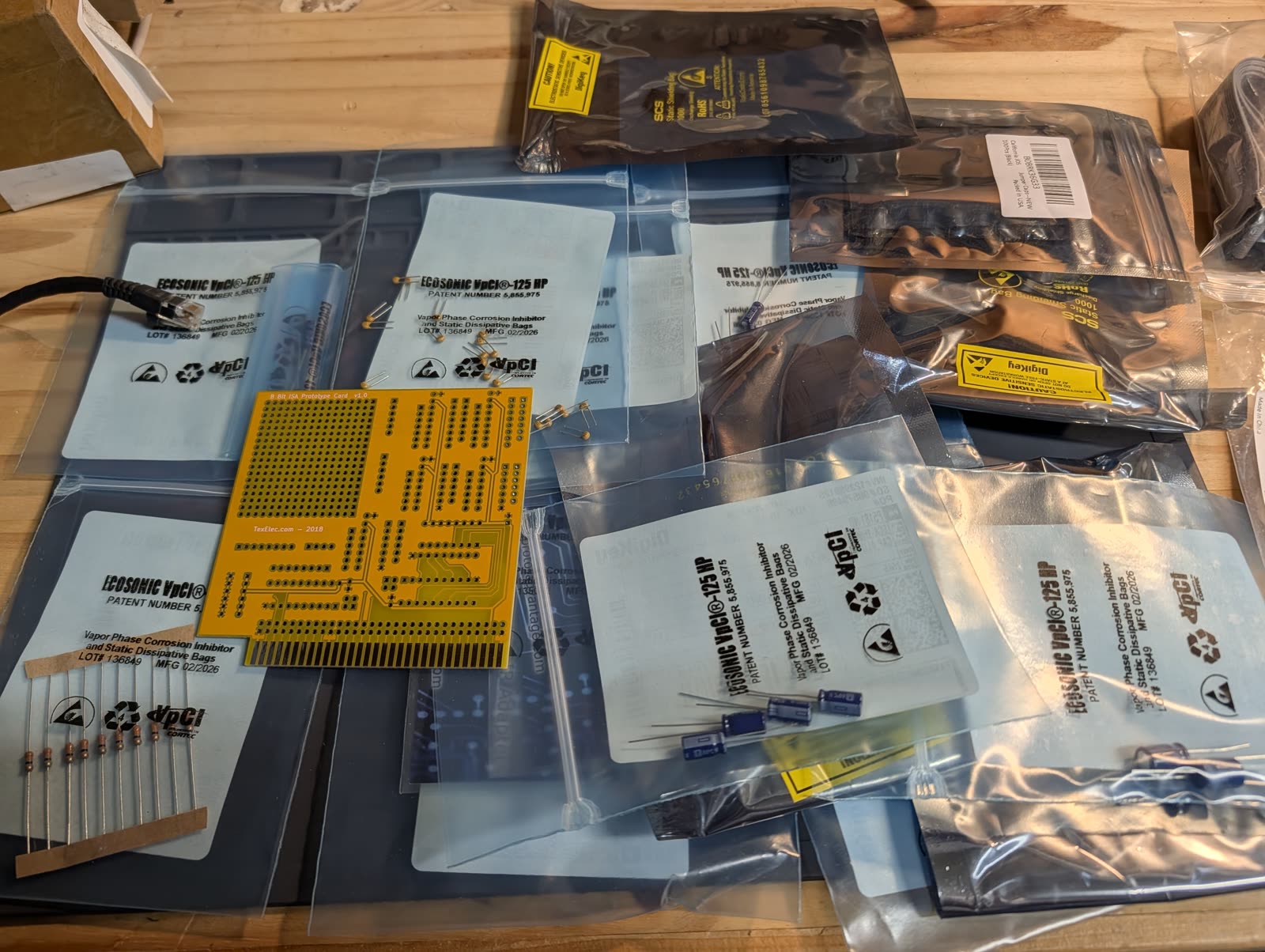
Status: Design stage. Not built. Paused since August 2026.
It's not dead. It's resting. NetISA is my design for an 8-bit ISA card that would let a DOS PC reach modern HTTPS websites. An ESP32-S3 on the card does the WiFi and the encryption, so the old CPU never has to do any of the heavy maths. As far as the PC knows, it's just talking to a few I/O ports through a small TSR. ## Why I want one Modern encryption is a lot to ask of a vintage CPU. Other people have come at the problem in clever ways. [Crypto Ancienne](https://github.com/classilla/cryanc) and [WinGPT](https://www.dialup.net/wingpt/tls.html) run TLS on the old machine itself, [PicoMEM](https://github.com/FreddyVRetro/ISA-PicoMEM) gives ISA PCs WiFi by pretending to be a network card, and [FrogFind](https://github.com/ActionRetro/FrogFind) and [Browservice](https://github.com/ttalvitie/browservice) put a modern computer in the middle. My idea is to put the encryption on the card instead, so the PC only ever deals with plain text. ## What exists right now So far it's a design, some code and a pile of parts. The logic that talks to the ISA bus runs in simulation, and the DOS side (the TSR and a little launcher) runs in the DOSBox-X emulator against a stand-in for the real card. The parts showed up in April 2026. Nothing has been built, powered up or tested on real hardware yet.